
Nose tip correction Berlin
The tip of the nose is a central element of facial harmony. Even small changes in this area can have a major influence on the overall appearance. A nose tip correction in Berlin offers the possibility of making targeted aesthetic refinements without having to surgically alter the entire nose. At Sinis Aesthetics, a particularly individual approach is the priority. Every nasal tip is considered in relation to the facial features, so that a natural and harmonious result is achieved. The aim is not to create a standardised shape, but to refine the existing structure in the best possible way. Nose tip correction is a comparatively gentle procedure that focuses primarily on the cartilage structure. This allows the shape to be adjusted precisely while the natural function of the nose is preserved.


Book an appointment
If you are interested in a nose tip correction, a personal consultation appointment is the first step. In an individual conversation, your wishes are analysed and the treatment options are discussed in detail.
Nose tip correction:
at a glance

Length of stay
in the clinic

Anaesthesia

Aftercare

Socially presentable

Pain

Durability

Costs
About nose tip correction
Nose tip correction is a specialised procedure within aesthetic nasal surgery. In contrast to a full rhinoplasty, the treatment focuses exclusively on the shape and structure of the tip of the nose. This allows the nose to be harmonised in a targeted way without altering the entire nasal dorsum or nasal bone.
The tip of the nose has a great influence on the overall impression of the face. Even small changes can make the face appear more refined, balanced or harmonious. A particularly precise approach is therefore necessary for a nose tip correction.
At Sinis Aesthetics, every treatment is planned individually. Anatomical prerequisites, skin structure and personal wishes are analysed carefully in order to achieve a natural-looking result.
When does a nose tip correction make sense?
A nose tip correction can make sense for a variety of reasons. Patients often wish for a more refined or more symmetrical nasal tip that better suits the proportions of the face. In some cases, however, functional complaints also play a role.
Before any treatment, a detailed analysis of the nose is carried out. The aim is to adjust the shape of the nasal tip so that it fits harmoniously into the overall picture while the natural function of the nose is preserved.
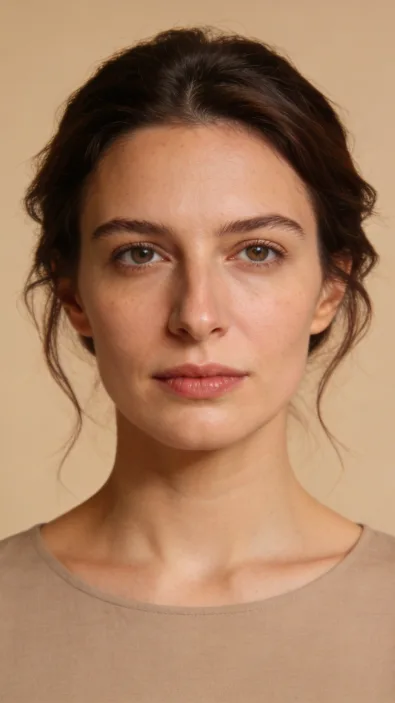
Many patients feel that their nasal tip is too wide, too large, asymmetrical or drooping. Because the nose sits at the centre of the face, even small irregularities can influence the overall facial impression. Through a targeted correction, the nasal tip can look more refined and harmonious. The aim is not an artificial result, but a natural adaptation to the individual facial features. Even small changes can make a clear difference. The wish for a more defined or more elegant nasal tip is also one of the most common reasons for a nose tip correction.
In some cases, the shape of the nasal tip can also cause functional problems. An unfavourable position of the cartilage can impair nasal breathing or restrict the airflow. By correcting the nasal tip, it is not only possible to improve aesthetics, but often also to support the function of the nose. Functional and aesthetic procedures are therefore often combined. A thorough examination beforehand is important in order to identify possible functional causes and to include them in the planning.
Nose tip correction vs. rhinoplasty
Nose tip correction differs significantly from a full rhinoplasty. While a classic rhinoplasty often also alters the nasal bone, nose tip correction focuses exclusively on the front area of the nose and the cartilage structure there.
As a result, the procedure is usually less extensive and often associated with a shorter healing time. Many patients choose this method when they are fundamentally satisfied with the shape of their nose and only wish to optimise the nasal tip.
Despite its smaller scope, the treatment requires a high degree of precision. Even small changes to the nasal tip can clearly influence the overall impression of the face.
Which changes to the nasal tip are possible?
The possibilities of a nose tip correction are varied and are adapted individually to the respective starting situation. The aim is to optimise the shape of the nasal tip while preserving a natural overall appearance.
Depending on your wishes, the nasal tip can be made smaller, straightened or reshaped. The existing cartilage structure plays a decisive role here, as it determines the stability and shape of the nose.
A nasal tip that is too large or too wide can make the face look heavy or unbalanced. Through targeted adjustments to the cartilage structure, the volume can be reduced and the tip shaped more finely. Particular care is taken to preserve the stability of the nose. The aim is not an exaggerated change, but a harmonious adaptation to the individual facial features. Especially with wide nasal tips, even a small correction can achieve a clear visual improvement.
A drooping nasal tip can be lifted. The procedure focuses on the cartilage structure so that the tip remains permanently in its new position.
Asymmetries of the nasal tip can be congenital or result from previous injuries. Even small irregularities can make the nose look unsettled or crooked. Through precise modelling of the cartilage, the nasal tip can be straightened and made more symmetrical. As a result, the face often looks more balanced and harmonious. The treatment is adapted individually to the existing anatomy in order to achieve a natural result.
Shaping the nasal tip is one of the most common wishes in the context of a nose tip correction. The tip is modelled in a targeted way to make it look more defined, narrower or more elegant. Depending on the starting situation, different techniques are used to achieve the desired shape. The aim is always a result that fits naturally into the overall picture of the face. Even small adjustments can clearly improve the profile and facial harmony.
Procedure of a nose tip correction
The procedure of a nose tip correction begins with a detailed consultation and ends with careful aftercare. Every step is planned individually in order to achieve a safe and aesthetically convincing result. Because the nasal tip consists of delicate cartilage structures, the procedure requires a precise approach and a great deal of experience. At the same time, the treatment is usually less burdensome than a full rhinoplasty.
Before the operation, a precise analysis of the nasal structure and facial proportions is carried out. Your wishes, the medical options and realistic results are discussed in detail. In many cases, a simulation is also used to visualise possible changes. This helps to put expectations into perspective and to plan the treatment precisely. Health prerequisites and the general healing process are also discussed in detail beforehand.
The operation usually takes between one and two hours. Depending on the starting situation, an open or closed approach is used. During the procedure, the cartilage structures are modelled and adjusted in a targeted way. The aim is to achieve the desired shape while preserving the stability of the nose in the long term. After the operation, the nose is stabilised and checked regularly in order to support the healing process in the best possible way.
Healing after a nose tip correction is usually quicker than after a full nose operation. Swelling and bruising are normal and subside gradually over the first few weeks. First results are often visible after a short time. The final result, however, develops over several weeks to months, as the tissue adapts slowly. Patience is particularly important during this phase, as fine changes often only become visible once healing is complete.
Healing and aftercare in detail
Healing after a nose tip correction is usually uncomplicated, but it takes time and careful aftercare. Especially in the first days after the procedure, the tissue reacts sensitively, which is why certain rules of behaviour should be followed. Consistent aftercare not only supports healing, but also contributes decisively to stabilising the desired result in the long term.
Swelling and slight bruising are normal in the first few days and subside gradually. Because the nasal tip consists of delicate cartilage structures, the nose should be protected as much as possible during the healing phase. Small external stresses can irritate the tissue and influence the healing process.
After the operation, physical exertion should initially be avoided. Sport, sauna or intense sun exposure can increase blood circulation and thereby worsen swelling. Direct pressure on the nose should also be avoided. This includes, for example, wearing heavy glasses or unconsciously touching the tip of the nose. When sleeping, a slightly raised position of the upper body is recommended to support the reduction of swelling. Cooling can help to reduce feelings of tension and swelling in the first few days. It is important not to place cooling packs directly on the skin, but to use a cloth in between.
The first healing phase usually lasts about one to two weeks. During this time, visible swelling and bruising go down significantly, so that most patients are socially presentable again. Fine residual swelling can, however, persist for longer, particularly in the area of the nasal tip. The final result often only develops over several weeks or months, as the tissue slowly adapts to the new shape. Patience is therefore an important part of the healing process. Small changes often only become visible as healing progresses.
Risks and side effects
Like any surgical procedure, nose tip correction is associated with certain risks. The most common side effects include swelling, bruising and a temporary feeling of tension in the area of the nose.
In rare cases, infections, wound healing disorders or minor asymmetries can occur. Temporary sensory disturbances in the area of the nasal tip are also possible. Careful planning and treatment by an experienced specialist can, however, reduce these risks significantly.
A realistic attitude is important. Small swellings or minimal irregularities are often part of the normal healing process in the first few weeks and usually resolve on their own.
Testimonials
Many patients report that even small changes to the nasal tip had a major influence on their personal well-being. It is particularly often highlighted that the result looks natural and that the nose fits the face more harmoniously. The comparatively short healing phase is also seen as positive by many. Many patients feel confident in everyday life again after just a few days and find the restrictions smaller than expected. The individual consultation and personal care are also frequently rated positively. Especially with aesthetic procedures, trust plays an important role in feeling at ease throughout the entire treatment process.


Cost of nose tip correction in Berlin
The cost of a nose tip correction depends on the individual effort involved and the technique chosen. As every nose has different anatomical prerequisites, the treatment is always planned individually. In addition to the procedure itself, consultation, aftercare and the type of anaesthesia also play a role in the cost calculation. A precise estimate is therefore always given in a personal consultation.
It is important not to make the decision based on price alone. Experience, precision and careful planning are decisive for a safe and aesthetically convincing result.
The costs vary depending on the extent of the procedure and individual requirements. Smaller corrections are usually less complex than more complicated changes to the cartilage structure. In the consultation, a precise analysis is made of which measures are necessary and what treatment effort is involved. This allows transparent and realistic information on costs to be provided.
Because nose tip correction is usually performed for aesthetic reasons, health insurers generally do not cover the costs. However, if functional complaints such as breathing problems are present, partial cost coverage may be possible in certain cases. This is assessed individually and depends on the medical starting situation.
Consultation appointment
A personal consultation appointment is the most important basis for a successful nose tip correction. Not only are aesthetic wishes discussed, but the anatomical prerequisites are also analysed carefully.
The focus is on an honest and realistic assessment of the possibilities. The aim is to plan a result that fits harmoniously into the face and looks natural in the long term. At the same time, the consultation offers the opportunity to clarify open questions and to gain more confidence in the decision.
Open continuously from Tuesday 08.00 to Saturday 14.00
Open continuously from Tuesday 08.00 to Saturday 14.00

FAQ on nose tip correction
Many interested people have similar questions before a nose tip correction, in particular about costs, the healing process and possible alternatives. The following answers give a first orientation and help to put the procedure into context.
-
The costs depend on the extent of the correction and the individual anatomical prerequisites. A precise estimate is therefore only possible after a personal examination. In the consultation, the changes you wish for and the treatment effort required are analysed. On this basis, transparent information on costs is provided.
-
Pain after a nose tip correction is usually described as mild. Many patients experience a feeling of pressure or tension rather than severe pain. With suitable painkillers, the discomfort can generally be controlled well. Most patients feel significantly better after just a few days.
-
The first healing phase usually takes one to two weeks. During this time, swelling and bruising go down significantly. The final result, however, develops over several weeks to months, as the tissue adapts slowly. Fine residual swelling can persist for longer, particularly in the area of the nasal tip.
-
Smaller visual adjustments can in some cases be carried out with hyaluronic acid. This can, for example, visually compensate for slight unevenness or a drooping nasal tip. A permanent structural change to the nasal tip, however, is usually only possible surgically. Which method makes sense depends on the individual starting situation.
Consultation at Sinis Aesthetics: your expert for nose tip corrections in Berlin
A nose tip correction requires precision, experience and a pronounced aesthetic understanding. At Sinis Aesthetics, every treatment is planned individually in order to achieve a natural and harmonious result. The focus is on a detailed consultation in which wishes, possibilities and the limits of the treatment are discussed openly. The aim is a nasal shape that suits the individual facial features in the best possible way.
Let the experienced aesthetic surgeon Prof. Dr. Sinis advise you in person!
Prof. Dr. N. Sinis has many years of experience in aesthetic facial surgery and advises you comprehensively on all the possibilities of nose tip correction. In a personal conversation, he analyses the individual shape of your nose and develops a suitable treatment concept together with you. The focus is on natural results and precise planning.
Your plastic surgeon introduces himself
Prof. Dr. N. Sinis is a specialist in plastic and aesthetic surgery with a specialisation in facial surgery and rhinoplasty. His work is characterised by precision, experience and a pronounced understanding of natural facial harmony. At the Sinis Clinic Berlin, patients are accompanied personally from the first consultation through to aftercare. Trusting care and individual planning are at the heart of this.